How to Prepare for a Music Recital
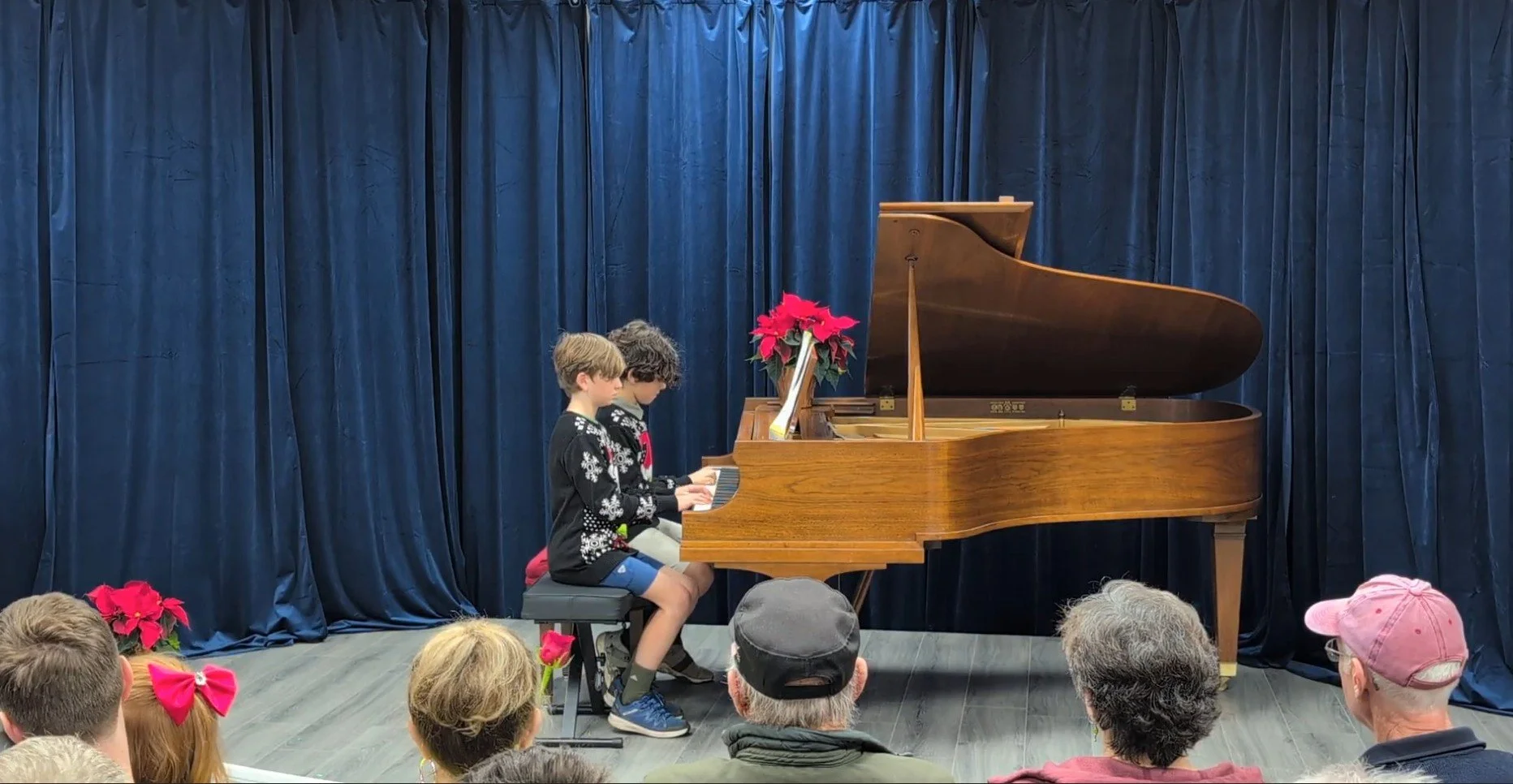
For many students, a recital is an exciting milestone, and sometimes a nerve-wracking one, too. Standing in front of an audience, remembering all the notes, and performing with confidence can feel like a big challenge.
The good news? With the right preparation and mindset, recitals can become one of the most rewarding parts of learning music.
Here are some simple, effective ways to help your child feel prepared, confident, and even excited for their performance!
1. Start Preparing Early (and Keep It Consistent)
Confidence doesn’t come from cramming the week before, it comes from consistent, steady practice over time.
Encourage your child to:
Practice their recital piece(s) a little each day
Focus on small sections, then gradually connect them together
Play through the piece regularly once it’s comfortable
Even just 10–15 minutes a day can make a big difference when it’s done consistently.
2. Practice Performing at Home
One of the best ways to prepare for a recital is to make performing feel normal.
Try creating small “practice performances” at home:
Play for family members after dinner
Perform for stuffed animals or pets
Record a video and watch it back together
You can even practice the full routine:
Walk to the piano
Sit down and get ready
Play the piece
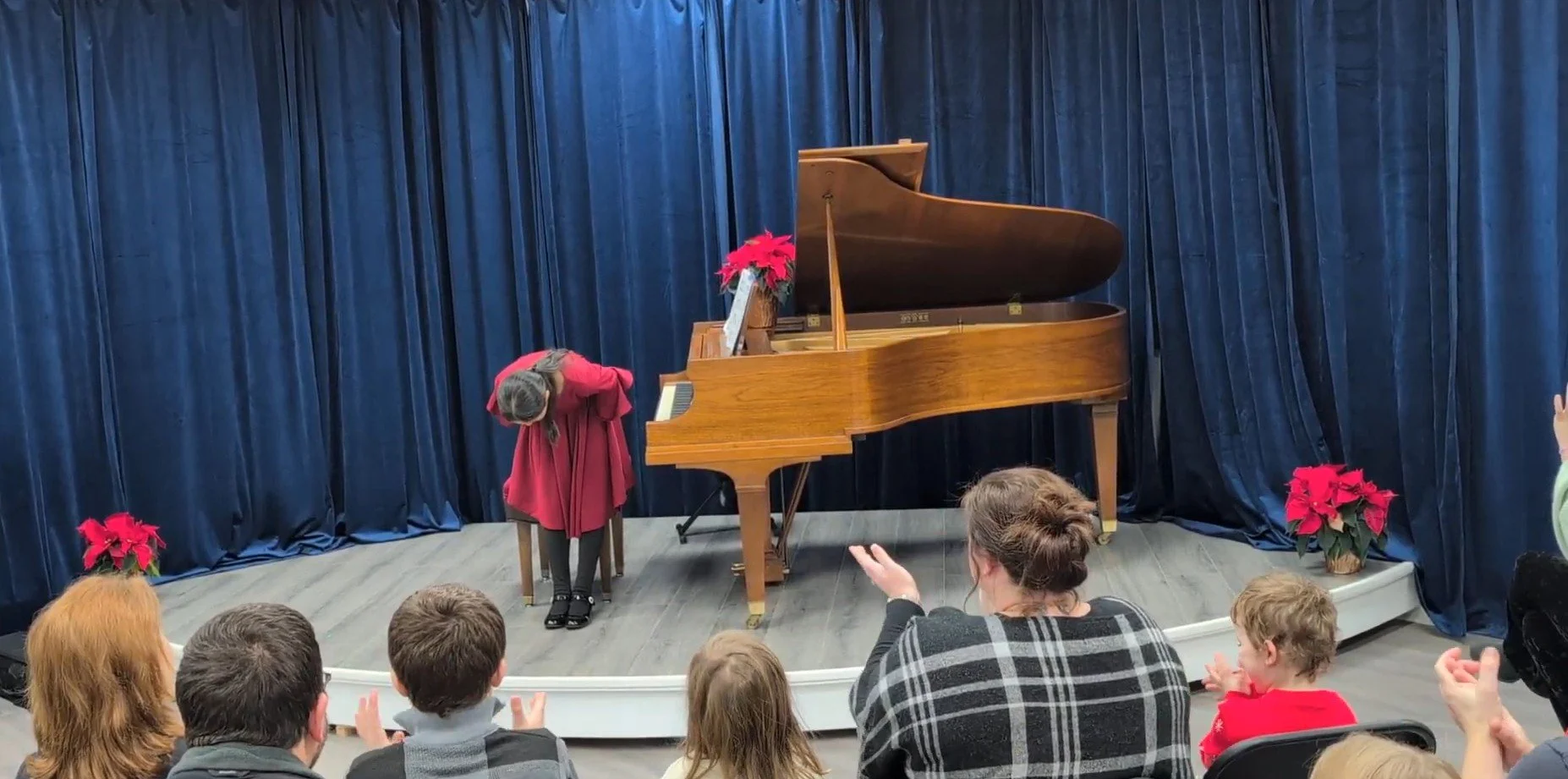
Take a bow at the end
The more familiar this feels, the less intimidating the real performance will be.
3. Practice With Purpose (Not Just Repetition)
Instead of just playing the piece over and over, guide your child to practice more intentionally:
Slow down tricky sections
Isolate problem spots and repeat them a few times
Practice hands separately if needed
Focus on dynamics (loud/soft), articulation (legato/staccato), and expression (not just notes).
This kind of thoughtful practice builds confidence because students know they truly understand their piece.
4. Talk About Nerves (They’re Normal!)
Almost every student feels nervous before a performance, even experienced musicians!
Let your child know:
Butterflies are normal
Nerves mean your body is getting ready to do something important
You don’t have to feel calm to do a great job
Instead of trying to eliminate nerves, help them learn to move through them.
5. Simple Ways to Calm Performance Jitters
Here are a few easy tools kids can use before they play:
Take a deep breath
Inhale slowly through the nose, exhale through the mouth.
Wiggle and relax
Shake out hands and shoulders to release tension.
Positive self-talk
“I know this piece.”
“I can do this.”
“I’ve practiced for this moment.”
Focus on the music, not the audience
Encourage them to think about telling the story of the song, rather than worrying about who is watching.
6. Keep Expectations Gentle
A successful performance isn’t about being perfect.
It’s about:
Showing up
Trying your best
Sharing something you’ve worked hard on
If a mistake happens (and it might!), the goal is to keep going. Most audiences won’t even notice small slips, and continuing forward is a huge win!
7. Celebrate the Moment!
After the recital, take time to celebrate your child’s effort:
Talk about what went well
Acknowledge their bravery
Avoid focusing on mistakes, and instead talk about their progress!
Performing takes courage. That alone is worth celebrating.
8. A Final Note for Parents
Your role matters more than you might think. The most helpful thing you can do is create a supportive, low-pressure environment where your child feels encouraged, no matter what. Your smile, your presence, and your encouragement will stay with them long after the recital is over.
Recitals are about so much more than music. They build confidence, resilience, and pride. They give students a chance to share their progress and experience the joy of performing. With a little preparation, a lot of encouragement, and the right mindset, your child can walk into their recital feeling ready and walk away feeling proud.